Helping the next generation get growing: TCE Electrical’s offer to schools and communities
UKUAT member TCE Electrical is offering LED grow lights free of charge to schools and community projects with a plan to put them to good use. One primary school is already showing what that support can make possible, with children preparing to grow crops for their kitchen while exploring the science behind food production.
After 26 years in the industry, Tim Coats from TCE Electrical wanted to give something back.
“We have lights available that people could be putting to good use,” he said. “If we can gift them to schools or a community project and help people get growing, it’s a no-brainer.”
The idea of giving back to the community first took shape some years ago, whilst Tim was donating blood at his local community centre. He noticed the lighting was in a very poor state and wanted to help contribute to replacing it, but instead ended up funding the whole project.
The experience left him with a real sense of fulfilment and self-worth, and ever since, he’s been looking for more ways to make a positive difference.
So, when he heard about a project to grow food in a primary school, during a conversation at Four Oaks, Tim saw another opportunity to give back.
From Four Oaks to the classroom
Tim was chatting with Ben Tea, who works at Niab and is a parent governor at his local primary school, when he mentioned the grow lights he had available. “Thousands of them,” he told Ben.
When Ben mentioned the school, Tim offered to supply the lights if he could find a suitable trolley or shelving.
Ben knew Tim as someone generous with both his knowledge and his time, and was quick to take him up on the offer. He approached Niab, which donated a CC trolley to form the structure of the growing system. Dejex also contributed substrate and seed trays.
Once the summer holidays arrived, Ben enlisted his son’s help. Together, they built and installed the system in a day.
The headteacher and wider academy governance team supported the project. With two academy governance committee members bringing agricultural and horticultural experience, the school also had practical knowledge to help make the system a useful part of pupils’ learning.
For Tim, the appeal goes beyond getting equipment into a classroom. It is about giving children a reason to take an interest in growing.
“Children should know where their food comes from. It doesn’t start on a supermarket shelf; somebody has grown it,” he said. “Growing your own food is cool, and the lights add something different that can grab their attention. Why wouldn’t we encourage that interest while they’re young?”
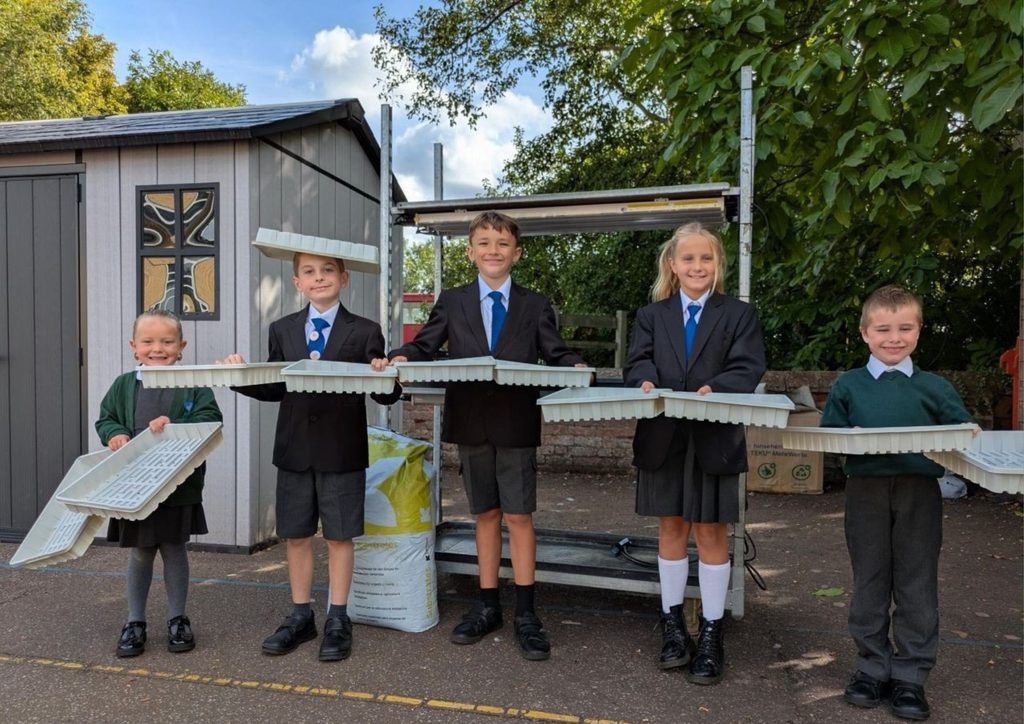
The children proudly involved in the setting up of the project. Image credit: Ben Tea
Growing food and curiosity
At the school, that interest will have plenty of room to develop. According to Ben, “this term’s plans include growing wheat to help children calculate seed rates, spinach and pak choi for the kitchen, and, hopefully, pansies for the garden.”
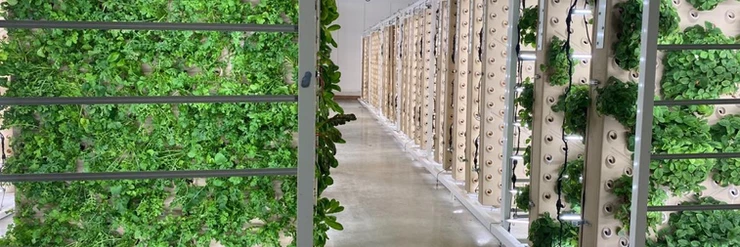
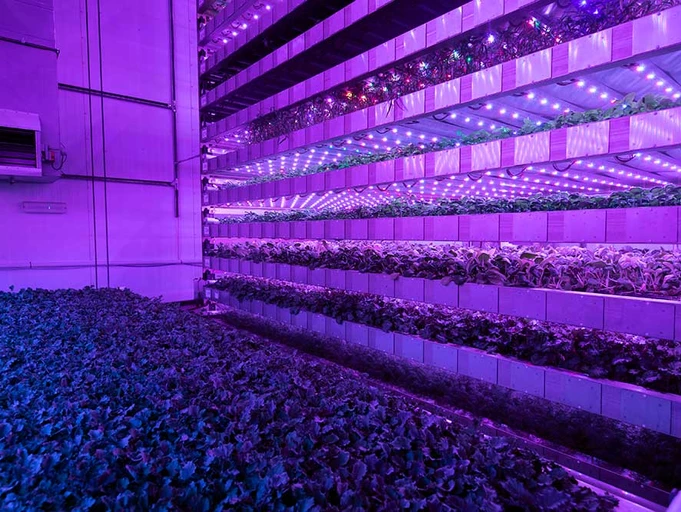
As a rural school, the project offers a way to connect pupils’ surroundings with the technology increasingly used in food production. Children can explore how food is grown traditionally alongside some of the approaches future growers may use.
“We are able to use the vertical growing system to showcase how modern technology is helping us to better understand how food is grown,” Ben explained.
Working alongside the academy, Ben is developing simple protocols that children can follow to complete growing tasks. Reading, mathematics and reasoning are built into the activities, giving pupils practical reasons to use those skills.
“By including the school syllabus when children use the vertical system, we’re not sacrificing reading and mathematics but ensuring we include them, alongside reasoning,” he said.
The hands-on approach also adds sensory experiences that Ben highlights as valuable for children with special educational needs and disabilities (SEND). Sowing, caring for plants and observing their development offer different ways to participate in learning.
For Tim, making those activities engaging is central to their value.
“Pardon the growing analogy, but it’s the carrot rather than the stick,” he said. “Give children something interesting to get involved with, something they want to find out more about, and you give them a reason to learn.”
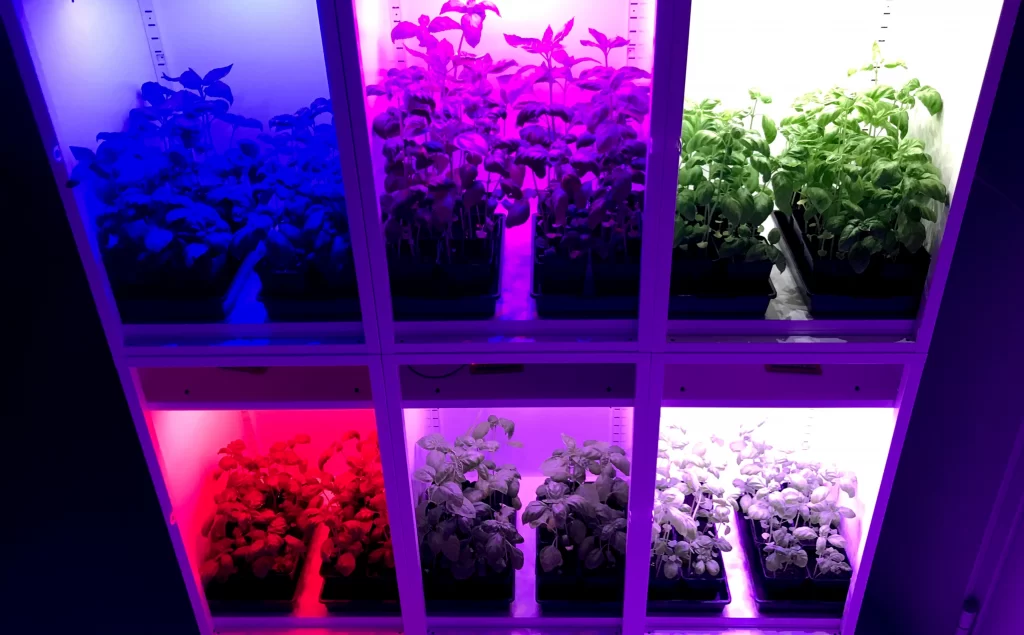
The lighting itself provides another subject to investigate. Tim describes the PKB lights supplied by TCE as “all-rounders,” offering opportunities to explore how the balance of red and blue light affects plant development.
Pupils could compare how leafy greens develop under different lighting conditions, observing differences in how loose or compact the leafy greens, for example, become. A simpler starting point could be to grow the same crop under the lights and on a windowsill, recording what happens over time.
These experiments bring together growing and STEM subjects through questions children can investigate themselves: what do plants need, what happens when conditions change, and how can technology help growers manage those conditions?
Free lights, with a plan to use them
TCE now wants to hear from others interested in starting a growing project. The offer extends beyond primary schools to secondary schools, colleges, universities and community groups.
There is no charge for the donated lights, but Tim does want applicants to demonstrate how they will use them.
“As a Yorkshireman, you don’t get owt for nowt,” he joked. “We’re not asking for money for the lights. We’re asking people to put a case forward: what do you want to grow, how are you going to use them, and how will the people involved benefit?”
That case could be a written plan, a video or a LinkedIn post. What matters is showing that the project has a purpose and that someone is ready to take responsibility for making it happen. “And if you’re applying for a school, bonus points if the children put the case together themselves!” Tim added.
Ben’s school provides one example of what that commitment can achieve. TCE supplied the lighting, Ben brought together the equipment and school support, and contributions from Niab and Dejex helped complete the setup.
Other applicants may have different ideas, whether that means growing food with a community group, introducing students to controlled environment agriculture or creating opportunities for people to try growing for the first time.
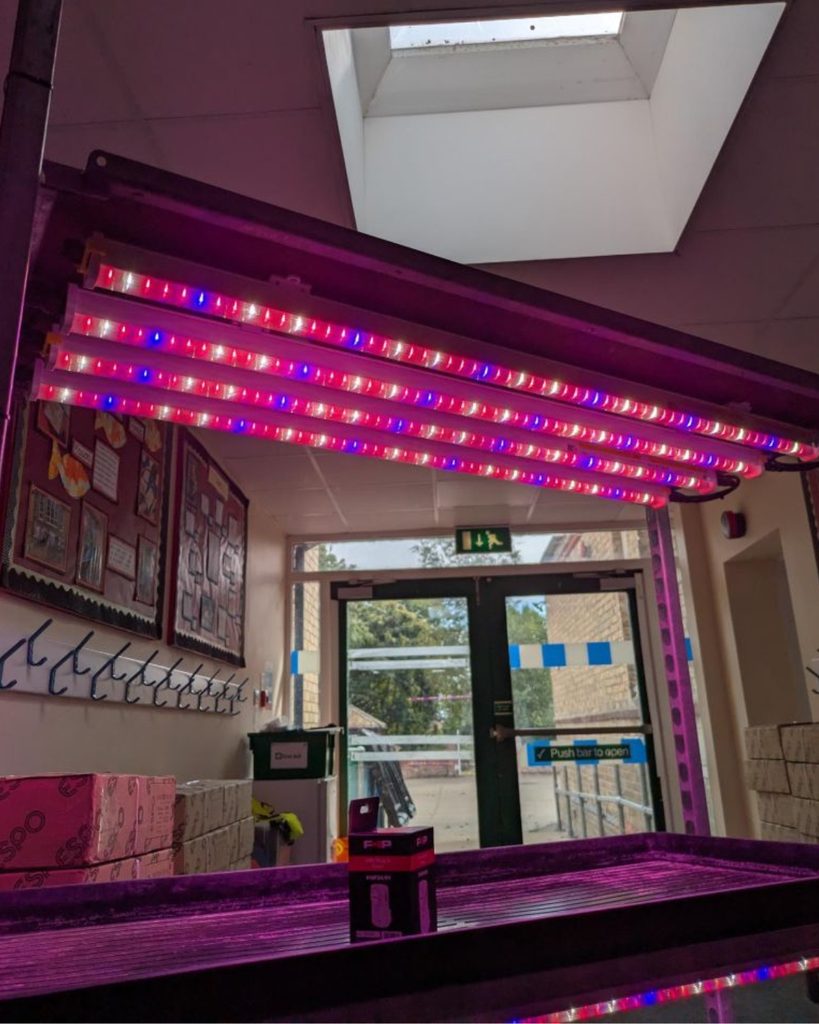
The LED grow lights donated by TCE, following installation by the children. Image credit: Ben Tea
How to get involved
Applicants will need a suitable flower trolley or shelving frame to accommodate the 1.2-metre light bars. TCE can provide four light bars, along with clips and cables, and discuss the setup requirements with recipients.
The lights are donated free of charge. Recipients can either pay for delivery or arrange free collection from TCE’s office.
To express an interest, email Tim at tim@tceelectrical.com or tagTCE Electricalin a LinkedIn post, explaining who the project is for, what you plan to grow, how the equipment will be used and how participants will benefit.
For UKUAT, the school project demonstrates how a member’s resources and expertise can help introduce more people to growing. A conversation at Four Oaks has become a practical learning opportunity, and TCE is keen to help others take that first step.
“You’re never too young or too old to get growing,” Tim said. “If you’ve got an idea and a plan for how you’d use the lights, we’d love to hear from you.”