
As a young Brazilian state, Tocantins residents are under pressure to produce more food without adding to the increasing deforestation the Amazon has seen for many years.
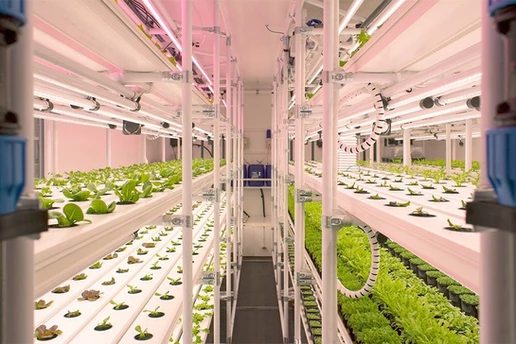
A research team is exploring whether vertical farming could offer a different approach to food production in the Legal Amazon. Their project, VERTICALISAR, is investigating how it could become a more accessible and sustainable option for the region.
The idea is simple: expand agricultural production upward instead of outward, whilst being closer to the people who consume it. However, as with any sustainable food system, the idea is much more complicated in practice.
Despite being rooted in Tocantins, the researchers recognised early on that the project could not be developed in isolation. If vertical farming is going to work in the context of the Legal Amazon, it makes sense to look at what is already being done elsewhere. The project has taken researchers on a mission from Tocantins to Colombia and the UK, bringing together different experiences, ideas and approaches before bringing those lessons back home.
Project VERTICALISAR
VERTICALISAR takes its name from the Portuguese verticalisar, meaning “to make vertical”.
The new collaboration brings together expertise from across the globe, from Brazil and Colombia to the United Kingdom. Each team has expertise spanning research, urban agriculture, technology and international knowledge exchange.
The project investigators are based at the University of Gurupi (UnirG) in Tocantins, Brazil, with UK Urban Agritech (UKUAT) and AGROSAVIA in Colombia acting as co-investigators. From UKUAT, Alana Kluczkovski, who is from Brazil herself, has been leading the UK contribution to the project.
Despite this international collaboration, the focus is firmly local.
Created around 35 years ago, Tocantins is one of Brazil’s youngest states and has become an important agricultural frontier. Cattle ranching and agriculture contribute to significant changes in land use.
That creates a difficult question for a region where communities still need food, jobs and economic development: how can production grow without simply demanding more land?
VERTICALISAR is investigating whether vertical farming could form part of that answer.
The ambition is not to import an expensive, ready-made vertical farm from somewhere else. Instead, the project is looking at whether a model can be developed that is low-cost, locally relevant and realistic for the communities and conditions of Tocantins.
That means understanding the territory before designing the technology.
Mapping recent Urban Agriculture
One of the project’s starting points was understanding how food is already being produced within and around cities.
A Geographic Information System (GIS) mapping technology was used to track urban agriculture across the region. The mapping system, such as the one UKUAT worked with for the V-FAST project, captures information on farm locations and sizes, and the types of crops being produced.
The data helped researchers build a picture of how urban agriculture is changing across the region, and the results raised concerns.
Over the past decade, the team identified a 40–50% decline in urban agriculture in the area.
For researchers, that makes understanding the reasons behind the decline just as important as developing new growing technologies. It helps create three focused questions to answer throughout the VERTICALISAR project:
- If urban agriculture is becoming less common, what would make it viable again?
- Could new approaches to growing help cities produce more food locally?
- Can technology make that possible without creating another system that is too expensive or complicated to maintain?
VERTICALISAR: Mission Abroad
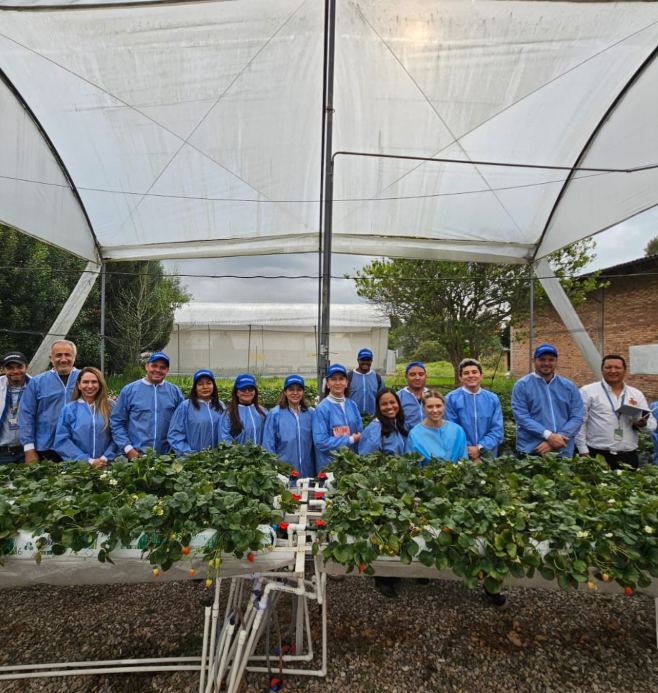
Across the world, cities and research organisations have already spent years experimenting with vertical farming, protected growing, urban agriculture and new approaches to food systems. So rather than trying to reinvent everything themselves, the project looked outward.
International missions have taken members of the team to Colombia and the UK, providing opportunities to see different approaches first-hand and, crucially, to speak to the people actually putting them into practice.
The aim is not to copy another country’s model. It is to understand what has worked, what hasn’t, and what could realistically be adapted to Tocantins.
Mission 1: Colombia
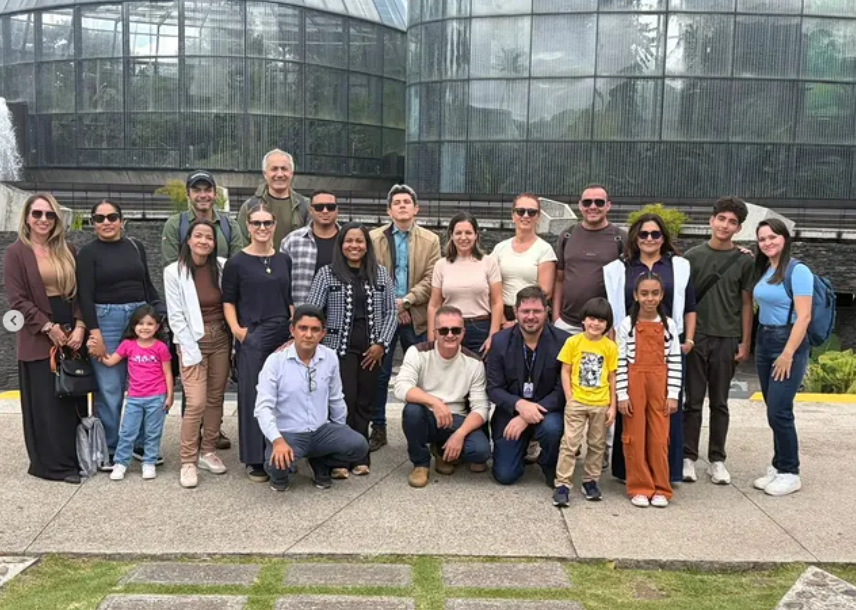
The team’s visit to Colombia offered many chances to explore urban and peri-urban agriculture from several different perspectives.
At AGROSAVIA, Colombia’s national agricultural research organisation, researchers visited laboratories, pilot plants and protected growing areas, seeing how agricultural research and innovation are being applied to sustainable production.
At the Sabio Mutis Agropark (an environmental laboratory and open-air museum), operated by UNIMINUTO, the focus broadened further, bringing together agroecology, climate change and ecological tourism.
The Botanical Garden of Bogotá provided another perspective, with decades of experience connecting urban agriculture with education and food security.
Finally, in San Andrés, the team saw the importance of community-led food production, including the role of women in strengthening food sovereignty in a territory heavily reliant on imported food.
Each visit highlighted how much there is to consider beyond the growing technology itself, from education and livelihoods to food security and community involvement. These considerations will also inform the model developed for Tocantins.
Mission 2: The UK
In the following months, through connections made by UKUAT, Alana and the VERTICALISAR researchers visited a range of research institutions and urban growing organisations, exploring different vertical farming approaches.
At the University of Surrey, researchers explored work focused on sustainability and reducing environmental impacts, including the facilities built by the Taeda Tech Project.
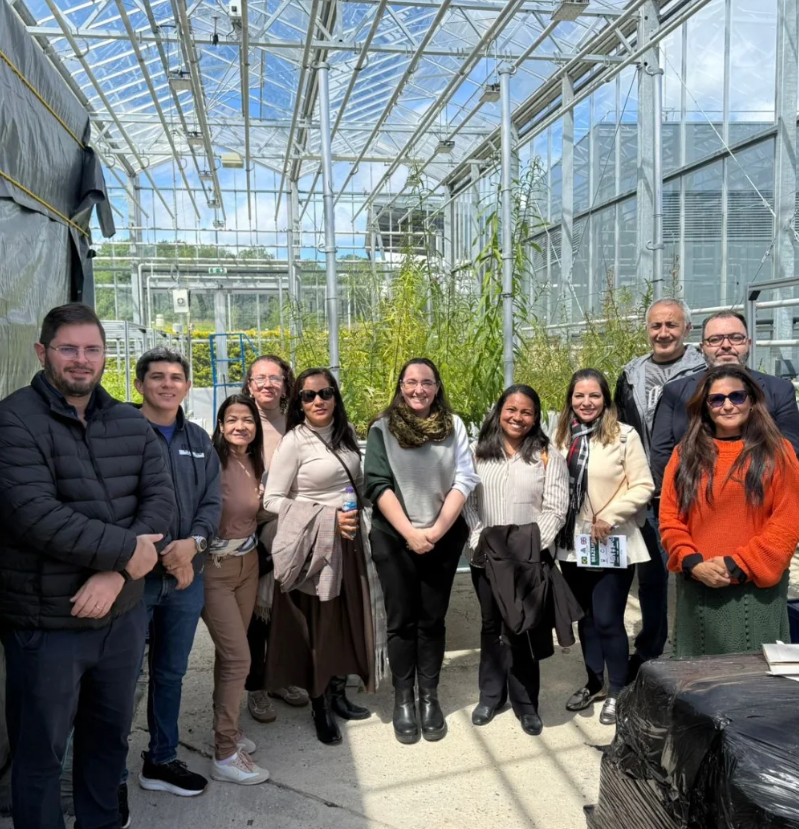
Whilst visiting the University of York, the team visited The Centre for Novel Agricultural Products – CNAP, including research greenhouses, Grow it York, the vertical farm and the University’s Walled Gardens. Here, they discovered different approaches to plant science and food production operating within the same research environment.
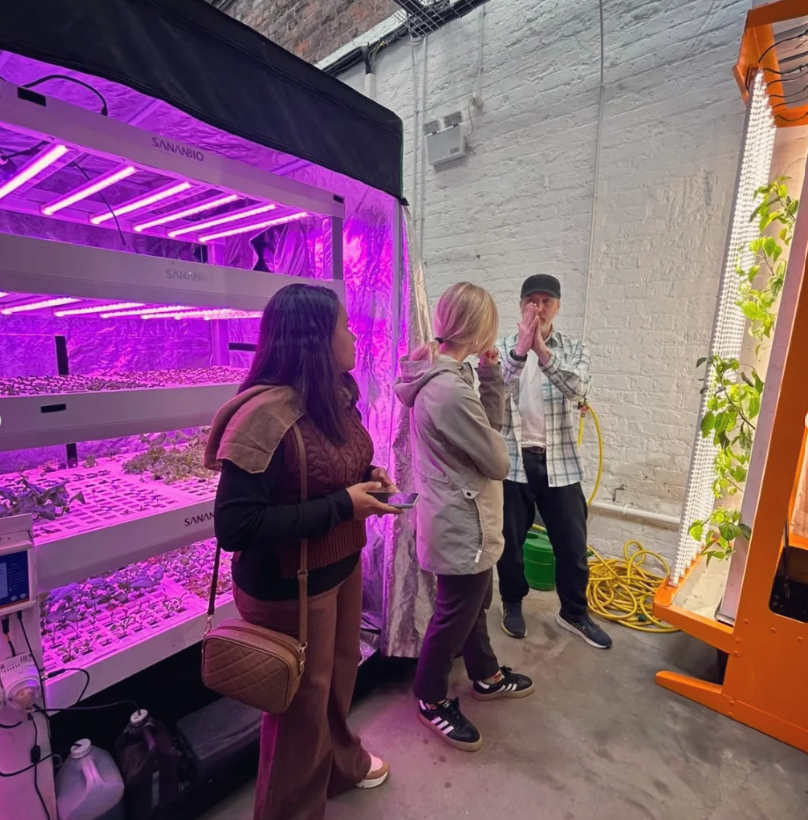
Finally, in Liverpool, Farm Urban offered a different perspective again, demonstrating how growing food can be connected directly with communities and wider questions of social sustainability.
Both missions helped the team look more closely at the practical questions behind running a vertical farm:
- How much does it cost to build and operate?
- How much energy does it require?
- What makes the economics work?
- How does it connect with its community?
Together, these questions led to a bigger one: which parts of these models could realistically work in Tocantins?
Bringing the Lessons Home
From the outset, international collaboration has been a key part of the VERTICALISAR project. By bringing together experiences from Colombia and the UK with the realities and knowledge of Tocantins, the researchers can explore what vertical farming could look like in this specific context, rather than simply applying a model developed elsewhere.
It is this combination of international experience and local knowledge that will help VERTICALISAR develop a vertical farming model that is practical, relevant and suited to the needs of Tocantins.
Now What?
VERTICALISAR is continuing to build its research and international partnerships, with further technical missions, knowledge exchange and collaboration planned across Brazil, Colombia and the UK.
The project is also building on work such as the Urban Agriculture Mapping of Gurupi, creating a stronger evidence base for understanding how food production is changing within the local territory.
Ultimately, VERTICALISAR is asking whether communities can produce more food locally, at a lower cost, without putting further pressure on the land. The next step is to continue investigating what would make that possible under the climate, infrastructure and economic conditions of Tocantins.